EXOPLANETS
101 · zoom in
Exoplanets — the other solar systems.
For most of history the planets we knew fit on one page: the Sun's family. That changed in 1995, when the first world was confirmed around another Sun-like star. Today the count runs into the thousands, and the strangeness is the point — lava worlds hugging their stars, giant planets on wild tilted orbits, and small rocky worlds in the temperate zone where water could pool.
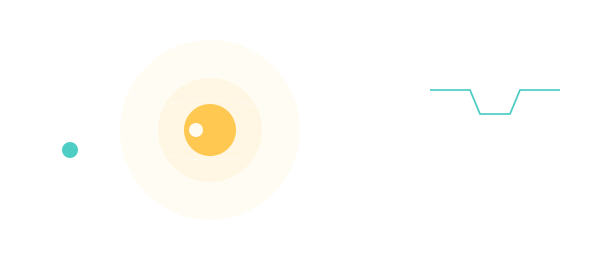
This tab is about how we find them — you cannot photograph most exoplanets, so we detect them by their fingerprints: a star's wobble, a periodic dimming, a gravitational flash. Then it turns to what we've learned: habitable zones, hot Jupiters, the seven chiming worlds of TRAPPIST-1, and the honest state of the question everyone asks — are we alone?
Every method section links into /explore, where you can drop into a real system on real orbits and watch the physics the article describes.
→ Pick a section from the right rail to start reading.